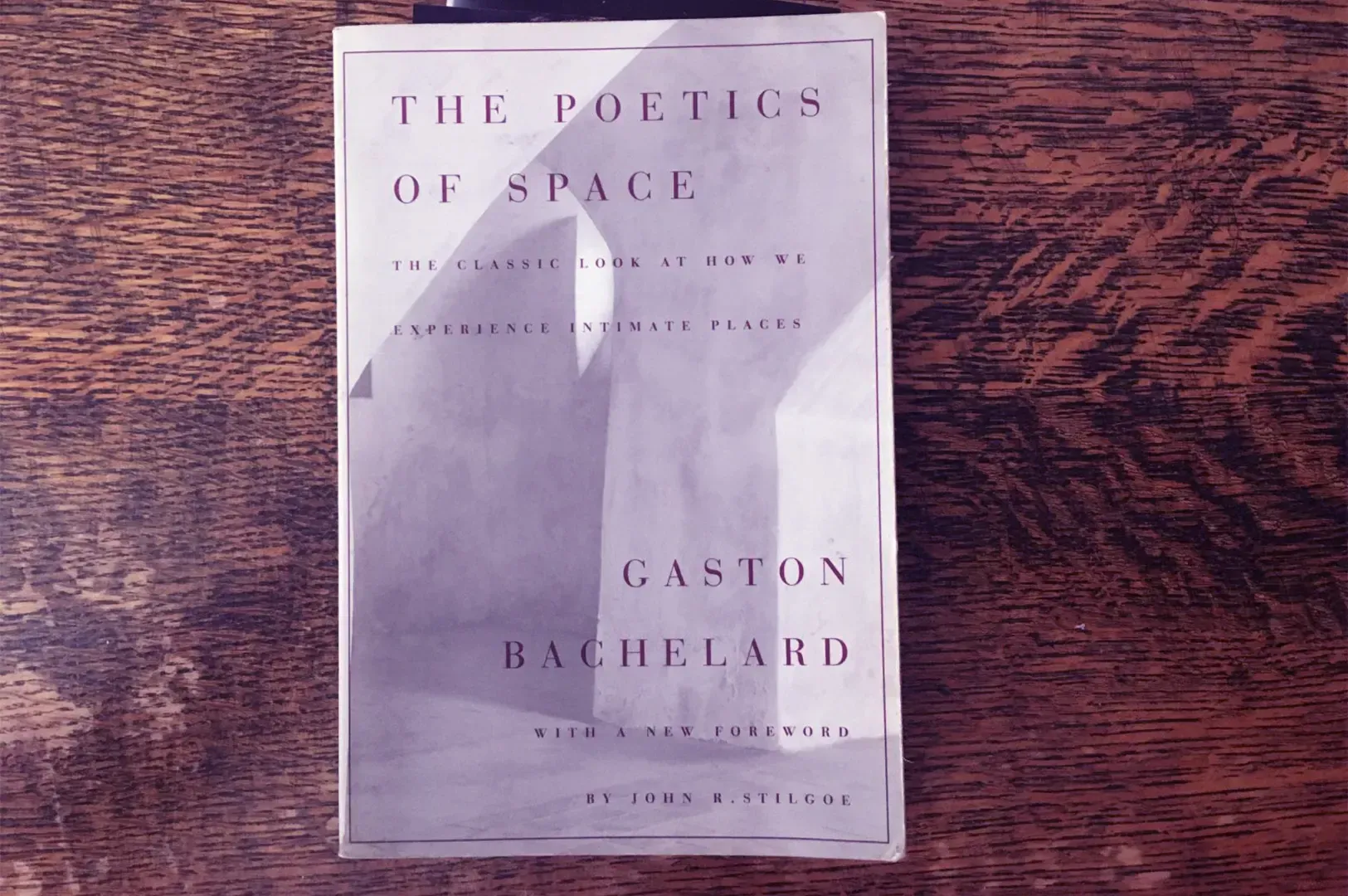

The Poetics of Space by Gaston Bachelard | My Quiet Empire Book Review

Bay San

Bay San


There was a corner in my childhood bedroom where the light never quite reached. I used to sit there with my back against two walls, knees pulled up, a book tented over my face. Outside, my family moved through the house with its ordinary noise. Inside that corner, I was somewhere else entirely. Safe in a way I could not have named then, and can only half-name now.

I thought of that corner constantly while reading The Poetics of Space. Bachelard would have understood it immediately. He spends whole passages on corners, on the way a small enclosed space becomes a room inside the room, a place where the self goes to be alone with itself.

Bachelard's central claim is quietly radical. The houses we live in do not simply shelter us. They shape the architecture of memory itself. He writes, in a line I keep returning to, that the house is one of the greatest powers of integration for the thoughts, memories, and dreams of mankind.

I have felt the truth of this in reverse. Years after leaving a place, I can still walk its rooms in the dark of my mind. The stairwell that turned left. The kitchen where the morning came in slantwise. These are not facts I remember. They are structures I still inhabit.

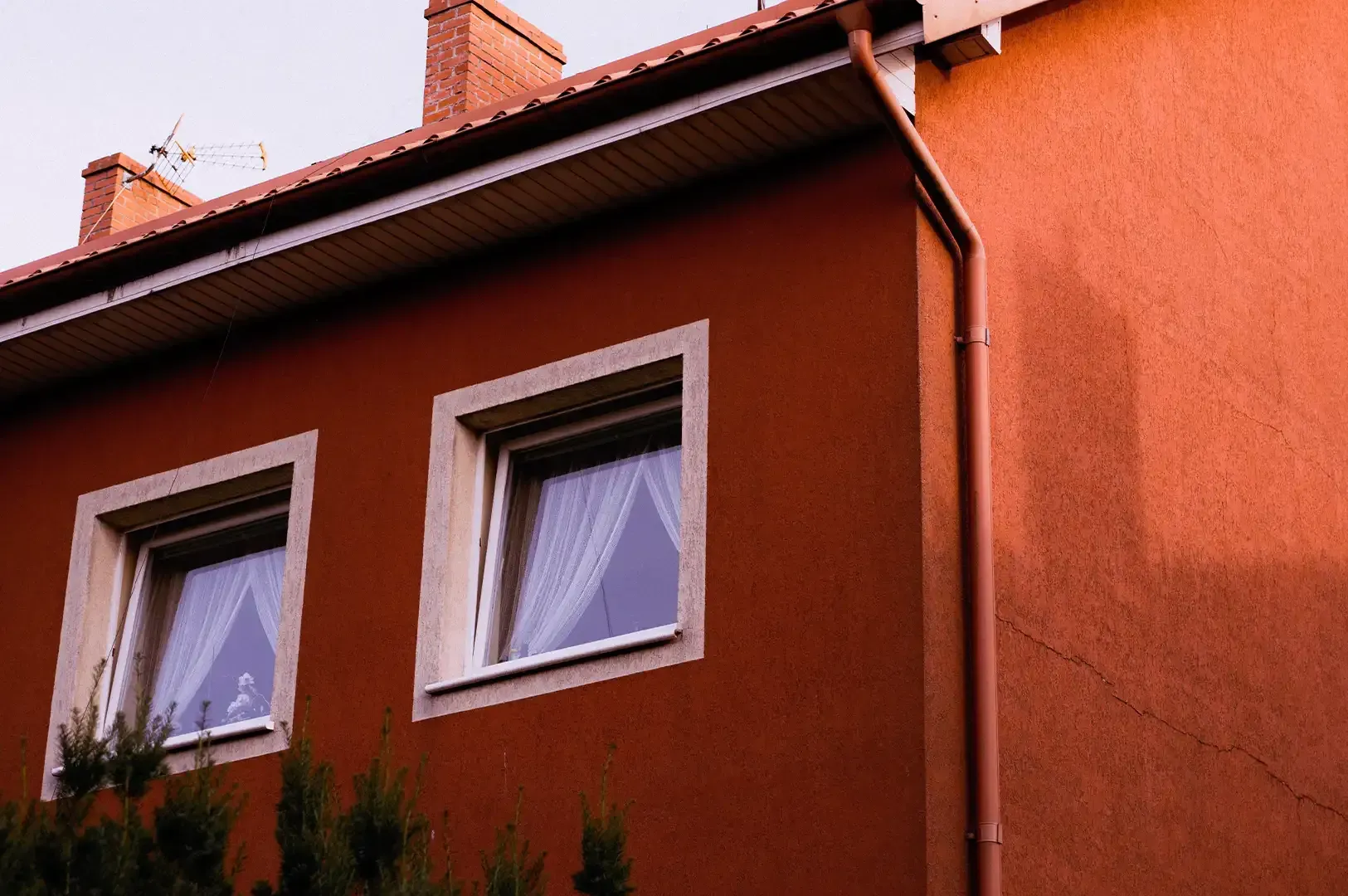
A view of house windows on a textured red exterior, evoking the themes of Gaston Bachelard's The Poetics of Space regarding how domestic architecture influences our inner lives and imaginative experiences.

The book argues that our first house is not a set of measurements. It is a set of feelings that lodge in us, drawer by drawer, threshold by threshold, and never fully leave. This is where a practitioner starts paying close attention.

If rooms train the inner life, then anyone who builds environments carries a quiet responsibility. I have designed spaces meant for focus and spaces meant for gathering, and I have learned they are not the same room wearing different furniture. A place either invites depth or it scatters attention. There is rarely much in between.

Bachelard gave me a language for something I had felt but never articulated. The corner that lets a person withdraw. The threshold that asks you to slow before entering. The container, a drawer or a chest, that holds the private things we are not ready to display. These are not decorative choices. They are instruments that tune how a person feels and thinks inside a place.

The same is true of the environments we build around work and culture. A room that offers no corner offers no rest.

I will be honest. The book is not always easy to stay inside. Bachelard drifts. He is a philosopher of reverie, and there are stretches where the prose floats so far into abstraction that I set it down and lost the thread. Much of it assumes a particular kind of house, rural, old, French, with attics and cellars that many readers today have never known. If you live in a small rented flat with no attic to dream in, some passages may feel like postcards from another century.

It is a book to wander, not to finish.

This one is for the person who suspects their surroundings are shaping them more than they admit. Not for the reader wanting a practical design manual.

A small practice stayed with me. Notice the corners you retreat to. Notice the thresholds you cross without thinking. They are telling you something.

So I will leave you where the book left me. Which room, right now, is quietly making you who you are?

More Book Reviews

A gold statue of Marcus Aurelius, symbolizing the Stoic focus on personal control, quiet duty, and t
By Bay San July 24, 2026
A practitioner reads Marcus Aurelius in a hard season, on control, quiet duty, and where Stoic composure quietly fails the people around us.
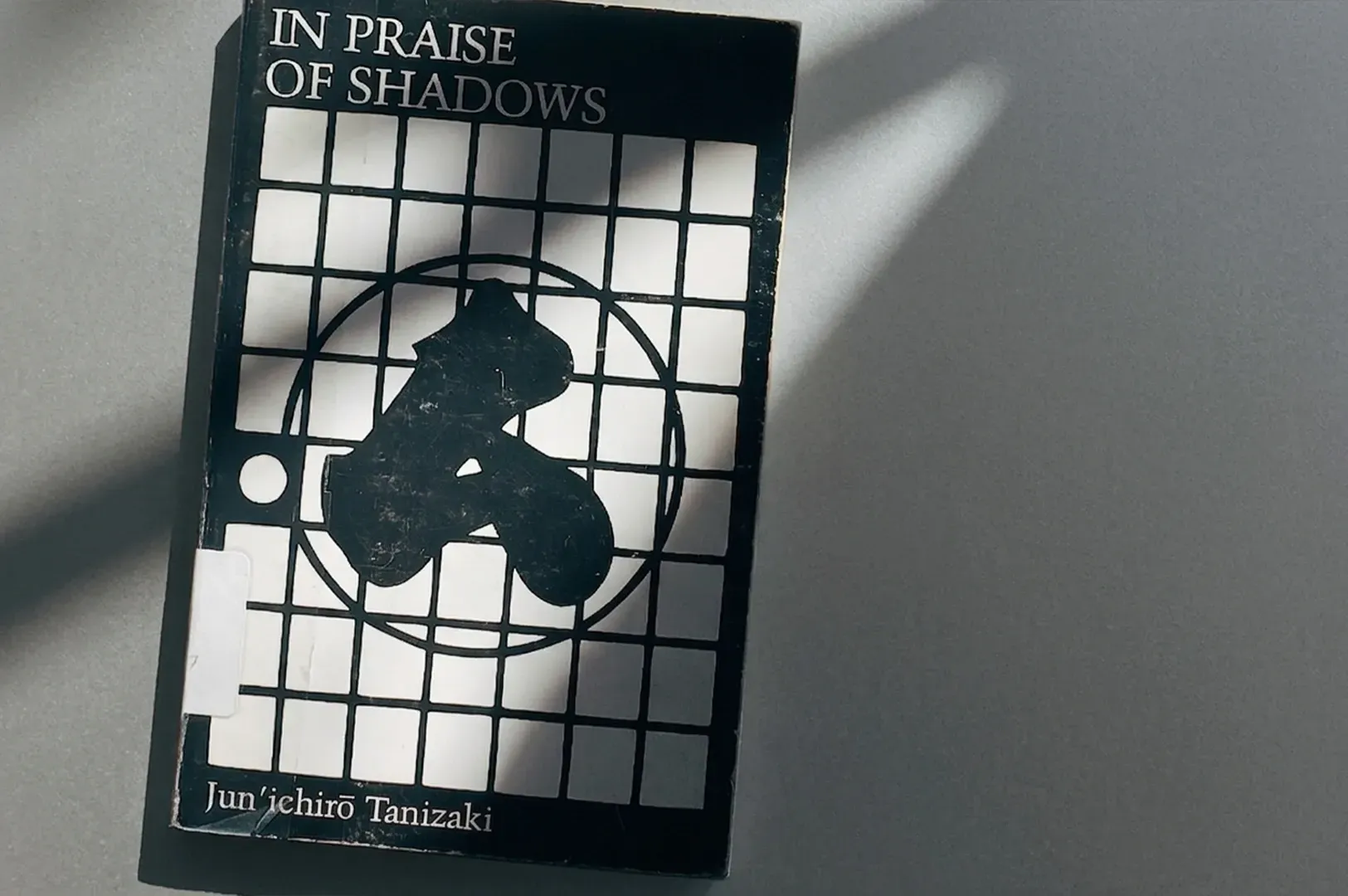
Book cover for In Praise of Shadows by Jun'ichirō Tanizaki, illuminated by a stark, contrasting beam
By Bay San July 17, 2026
Tanizaki makes the case for shadow over brightness, and why restraint, patina, and dim light create the atmosphere that clarity destroys.

The book cover of
By Bay San July 15, 2026
Roman Krznaric reframes legacy as cathedral time: building for people you will never meet, and the quiet discipline of the long view.

A close-up, high-angle shot of the book A Field Guide to Getting Lost by Rebecca Solnit, centered on
By Bay San July 3, 2026
Rebecca Solnit reframes getting lost as a discipline: a return to humility, attention, and the kind of not-knowing that remakes you.
A copy of 'On Dialogue' by David Bohm resting on a dark surface, representing the foundational conce
By Bay San June 25, 2026
Why genuine dialogue is rare: a reflection on Bohm's idea of thinking together, suspension, and what real listening demands of leaders and teams.
A close-up shot of the book cover
By J.C. Yue June 19, 2026
A reflection on Craeft and what craft teaches about mastery, maintenance, and building enduring value in business and life.
The book of 'Turn the Ship Around! A True Story of Turning Followers into Leaders' by former nuclear
By Bay San June 12, 2026
Marquet's lesson isn't "be nicer"—it's build leaders everywhere. A reflection on intent, ownership, and quiet mastery in teams.
A flat-lay photograph of the 50th-anniversary edition of Invisible Cities by Italo Calvino, resting
By Bay San June 5, 2026
Calvino’s Invisible Cities shows how places are built from desire and memory, an elegant lesson in craft, perception, and quiet power.
Top-down flat lay shot of “Solitude: A Return to the Self by Anthony Storr” book on a wooden table,
By Bay San May 29, 2026
Anthony Storr reframes solitude as strength: the quiet discipline that forms identity, fuels craft, and steadies builders in a noisy world.
Flat lay overhead shot of “A Life Less Throwaway” by Tara Button on a white wooden surface, minimali
By Bay San May 22, 2026
Meta Description: Tara Button argues for repair over replace. A reflection on durability as discipline, and what it means to build a life that lasts.
Show More